Ferrets may look like other small pets, but their food needs are different. Rabbits thrive on hay, and hamsters can eat varied plant foods. Ferrets cannot. They are obligate carnivores, built to obtain nutrients from animal-based foods rather than grains, fruit, or vegetables. That distinction should guide everything from the main food bag to an occasional training treat.
This ferret feeding guide explains protein and fat needs, suitable foods, feeding routines, and the ingredients worth leaving out.
Why a Ferret Diet Must Be Meat-Based
Ferrets have short digestive tracts and move food through them quickly. They cannot extract nutrients from substantial amounts of fibre or complex plant carbohydrates as effectively as herbivorous or omnivorous pets. Animal protein supplies essential amino acids, while fat provides concentrated energy.
However, an all-meat menu is not automatically complete. Plain muscle meat may lack an appropriate balance of calcium and other nutrients. A complete, well-formulated ferret food is usually the simplest foundation, with veterinary guidance for growing, pregnant, senior, or unwell animals.
Ferret Protein Needs and the Role of Fat
Protein Quality Matters
Veterinary guidance commonly describes suitable adult ferret foods as containing roughly 30–40% protein, with some recommendations around 35–40%. Most protein should come from animal sources. Identified ingredients such as chicken or turkey are more relevant than a high protein figure achieved mainly with peas or other plant ingredients.
Read the ingredient list alongside the nutritional analysis. Confirm that a product is complete and suitable for ferrets, not simply advertised as a high-protein snack.
Fat Provides Essential Energy
Fat should not be minimised indiscriminately. Adult feeding recommendations often suggest around 15–20% fat, although published ranges and specialist formulas vary. Age, activity, health, and body condition can influence what works best. Avoid adding oils to compensate for an inadequate commercial diet; choose a balanced recipe instead.
Comparing Ferret Food Types
Commercial Ferret Kibble
A reputable complete ferret food is generally the most convenient everyday choice. Check animal-protein sources, fat, fibre, and the intended life stage. Dry kibble stores easily and can remain available for frequent small meals when kept fresh and hygienic.
Remember that moisture changes how nutritional percentages appear on labels. A wet food’s protein percentage cannot be compared directly with dry kibble without accounting for water content.
Wet Foods and Cat Food
Some ferrets benefit from familiarity with an appropriate moist food before illness or old age makes chewing harder. Choose a complete ferret-suitable product where possible, and remove uneaten portions promptly. Ordinary cat food is not automatically appropriate. Although certain kitten foods have historically been used as alternatives, ask an exotic-pet veterinarian before making one a regular substitute.
Raw Meat and Whole Prey
Raw feeding may seem natural, but it poses nutritional and hygiene challenges. Raw muscle meat alone lacks essential balance, while raw products can carry bacteria or parasites harmful to pets and people. Bones require particular care. Anyone considering whole prey or a raw diet should consult a ferret-experienced veterinarian about completeness, safe sourcing, handling, and storage.
Foods to Avoid
Ferrets are not miniature omnivores. Fruit, bread, cereal, sweet biscuits, and starchy vegetables are poor choices because they provide carbohydrates without meeting ferret protein needs. High-fibre rabbit or guinea-pig pellets are not substitutes for ferret food.
Avoid chocolate, raisins, sugary snacks, milk, and other dairy products. Chocolate can be dangerous, and sweet or plant-heavy foods can cause digestive upset and undesirable changes in blood glucose. Also avoid seasoned table scraps and foods containing onion or garlic.
A useful shopping test is simple: does this product support balanced animal-based nutrition, or is it merely something a ferret might enjoy tasting?
How Often Should You Feed Your Ferret?
Because ferrets digest food quickly, they typically eat numerous small meals. Healthy ferrets often do best with their complete food available throughout the day, along with constant clean water. Monitor portions and body condition, and seek veterinary guidance if weight becomes a concern.
For example, imagine two ferrets sharing a home. Each morning, measure the kibble offered, refresh the water, and check the leftovers. If one ferret guards the bowl, provide separate feeding stations. An empty shared dish does not prove both animals ate enough.
Use stable, washable water bowls or an appropriate drinking setup. Check the supply at least twice daily, especially during warm weather. A portion of the regular kibble can also be hidden in a safe food puzzle; safe ferret enrichment activities make mealtimes more interesting without increasing treats.
Choosing Safe Treats for Ferrets
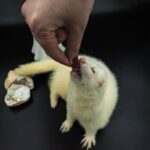
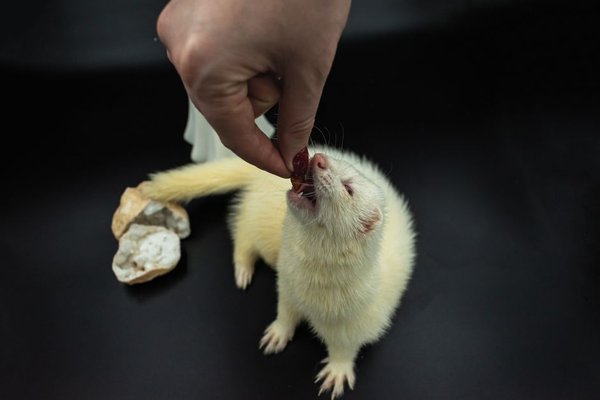
Treats should be tiny rewards, not another meal. Small pieces of plain, thoroughly cooked chicken or turkey, a little cooked egg, or suitable unseasoned meat-based ferret treats are sensible occasional options.
Keep extras modest. Animal-welfare guidance suggests treats should provide no more than around 10% of daily calories. During training, offer very small morsels so several rewards do not replace a meaningful portion of balanced food. A packet marked “small pet treats” may be designed for herbivores rather than ferrets.
Switching Foods and Spotting Feeding Problems
Some ferrets resist unfamiliar flavours and textures. Introduce a new food gradually by mixing increasing amounts into the familiar diet while watching appetite and stools. Sudden changes can upset digestion.
Keep track of eating patterns and weight. A practical ferret weight and body condition guide can help owners recognise changes before they become obvious. Contact a veterinarian promptly if your ferret refuses food, drools, vomits, seems weak, or becomes unusually sleepy. Collapse or marked weakness requires urgent veterinary attention.
Frequently Asked Questions
Can Ferrets Eat Cat Food?
Some high-quality kitten formulas have been used when ferret food was unavailable, but not all cat foods meet ferret requirements. A complete ferret-specific product is generally preferable. Ask a veterinarian to review any substitute.
How Much Protein Does a Ferret Need?
Many veterinary sources suggest roughly 30–40% protein in suitable dry foods, primarily from animal ingredients. Protein is only part of the picture: enough fat, low fibre, and balanced vitamins and minerals matter too.
Can Ferrets Eat Fruit as a Treat?
Fruit is not recommended. Its sugars and plant material do not suit a ferret’s carnivorous digestive system, even if the animal seems interested. Use a tiny plain meat-based reward instead.
Should Ferrets Always Have Drinking Water?
Yes. Provide uninterrupted access to fresh water, clean containers regularly, and watch for changes in drinking. A ferret that suddenly drinks or eats differently may need veterinary assessment.
Make Every Feeding Choice Count
Good ferret nutrition begins with complete animal-based food, adequate protein and fat, minimal unnecessary carbohydrates, and reliable fresh water. Keep treats occasional, introduce new foods slowly, and watch each animal’s appetite and condition. Knowing how to choose an exotic-pet veterinarian is equally valuable when dietary needs change.