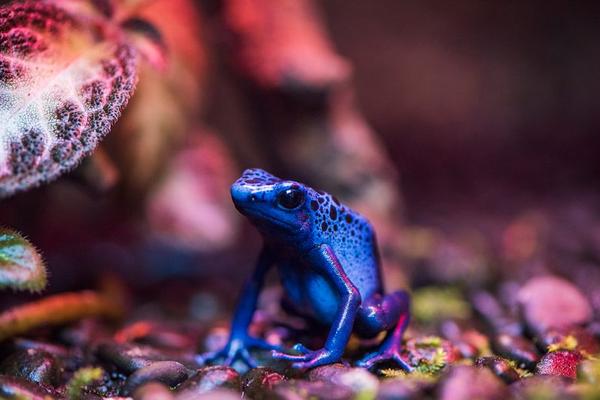
A good dart frog terrarium looks like a small piece of rainforest, but its success depends on what you cannot immediately see. Water needs somewhere to drain, moist air needs to circulate, and frogs need sheltered places that are not constantly dripping wet. Build those systems first and the lush planting becomes easier to maintain.
This dart frog terrarium setup guide explains the practical choices behind a planted, bioactive enclosure. First, confirm the needs of your chosen species: dart frogs differ in size, climbing habits, social behavior, and environmental requirements.
Choose the Enclosure Before Buying Plants
A front-opening glass vivarium offers easy access for feeding, while a secure lid retains moisture and prevents escapes. An enclosure around 45 × 45 × 45 cm (18 × 18 × 18 inches) may suit some smaller species, but larger frogs, groups, and climbing species need different dimensions. Research species and group size instead of relying on one universal minimum.
Look for controllable ventilation near the front and top. Plan the positions of misting nozzles, lights, drainage access, and thermometers before adding a background. Keep the enclosure away from direct sunlight and radiators.
Build Drainage You Can Maintain
Drainage is the foundation of a reliable dart frog vivarium. Misting water must pass below the growing medium rather than leave roots and leaf litter submerged. Build the floor in layers: reservoir, separator, substrate, and leaf litter.
Create an accessible drainage layer
Use expanded clay balls or a properly constructed false bottom to create space for excess water. Fit inert plastic mesh above it so soil cannot fall into the reservoir. Include a way to remove accumulated water, such as a concealed access tube. A drainage layer that fills completely stops working.
For example, in a 45 cm-wide vivarium, position the drainage access in a front corner before planting. You can then draw off water without uprooting a fern or dismantling cork decorations. Keep the reservoir inaccessible to frogs.
Give Substrate and Leaf Litter Different Jobs
Dart frog substrate should hold moisture while allowing air around roots. A suitable tropical mix often contains fine orchid bark, coco fiber, and stable organic materials. Avoid garden soil with fertilizers, pesticides, or unknown additives.
Cover exposed soil with clean, amphibian-safe leaf litter, such as appropriately prepared oak or magnolia leaves. It creates hiding spaces and feeding surfaces while limiting contact with saturated soil. Replace heavily decayed leaves when necessary.
Springtails and suitable small isopods help break down organic debris in bioactive habitats. They do not replace spot cleaning or drainage checks. For a closer look at these layers, see our guide to bioactive terrarium substrates.
Maintain Dart Frog Humidity Without Stagnant Air
Many commonly kept dart frogs require high humidity, often around 75–90% or higher depending on species. A hygrometer reveals trends, but one reading cannot describe every corner. Check humidity before and after misting.
Use dechlorinated, amphibian-safe water in a hand mister or automatic system. Aim for moist leaves and humid air, not puddles across the floor. Allow exposed surfaces to become less wet between mistings while sheltered spots remain humid. Adjust the schedule to ventilation, room conditions, and plant growth.
Condensation that never clears, a sour smell, or permanently sodden litter suggests an imbalance. Examine drainage and airflow instead of simply cutting misting. A partially covered top with protected vents often works better than a completely sealed enclosure.
Choose Dart Frog Plants for Useful Cover
Healthy dart frog plants create hiding and climbing spots. Compact ferns provide low cover, creeping vines soften backgrounds, and suitable bromeliads add shelter above the ground. Select plants that tolerate humidity without crowding out usable floor space.
Rinse and quarantine plants where practical, remove fertilizer residues, and avoid pesticide-treated specimens. Secure cork bark and branches firmly. Leave enough open space to feed and observe the frogs.
Try leaf litter and a small fern at the front, a cork retreat at the back, and climbing greenery along one side. This creates several microhabitats without blocking every view. Our guide to safe tropical terrarium plants offers more planting ideas.
Light the Plants Without Overheating the Frogs
Low-heat LED grow lighting supports plants and a predictable day-night rhythm. A timer providing roughly 12 hours of light and 12 hours of darkness is a sensible starting point. Ensure frogs have shaded retreats.
UVB guidance varies by species, supplementation, and enclosure design. Neither intense UVB lamps nor a blanket assumption that ultraviolet light is unnecessary is appropriate. Follow species-specific husbandry advice, ideally from an experienced amphibian veterinarian.
Many commonly kept species thrive at temperatures in the low-to-mid 20s Celsius (roughly 70–78°F), but verify the range for yours. Monitor temperatures during the warmest part of the day. Avoid basking bulbs and direct sunlight through glass; overheating can become dangerous quickly.
Provide Safe Water and Test Before Adding Frogs
Most dart frogs do not need a deep pond. A shallow, easily cleaned water dish may be useful if frogs can enter and exit safely. Use water free from harmful chlorine and chloramine, and avoid exposed deep water features.
Run the assembled enclosure without frogs first. Track mist drying, water collecting beneath the substrate, plant health, temperature, and humidity. A week or two of observation can expose problems before animals arrive. Keep a simple log; an amphibian habitat maintenance checklist can help organize recurring tasks.
Frequently Asked Questions
How wet should a dart frog terrarium be?
The air should remain humid according to the species’ requirements, while the substrate drains freely. Moist leaf litter is useful; a constantly waterlogged floor is not. Observe conditions as well as checking your hygrometer.
Do dart frogs need live plants?
Live plants offer cover, climbing surfaces, and a natural habitat structure. They also support bioactive systems, although they cannot replace ventilation, cleaning, or environmental monitoring.
Is a waterfall necessary in a dart frog vivarium?
No. Waterfalls introduce extra cleaning demands and potential safety issues. Effective drainage, misting, safe water access, and plenty of shelter are more useful priorities.
When can frogs enter a new bioactive enclosure?
Only once humidity, temperature, drainage, and ventilation have proved stable. Confirm that materials are amphibian-safe and that your feeding and supplementation plan suits the species.
Build for the Frogs, Then Let the Plants Fill In
The best dart frog terrarium setup balances moisture with drainage, greenery with access, and lighting with shade. Build a serviceable system, test it patiently, and adjust it to the species and conditions. It should function as a healthy habitat before it looks like a finished rainforest display.