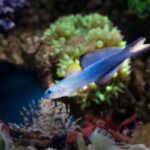
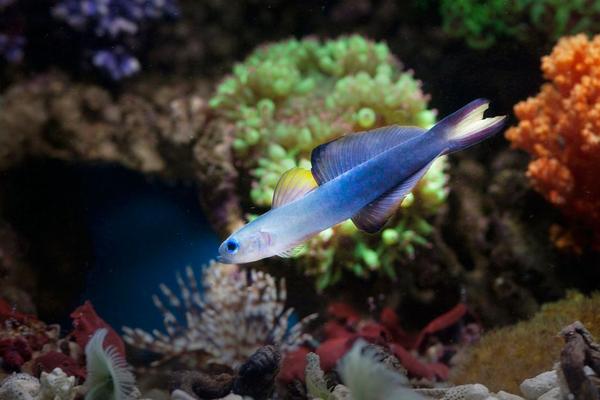
A watchman goby may spend most of its day near the sand, but that small patch of aquarium floor can become the most interesting part of a reef tank. These fish watch from burrow entrances, retreat when startled, and sometimes share shelter with a pistol shrimp. Good watchman goby care begins with understanding this bottom-dwelling lifestyle.
This guide focuses on the yellow watchman goby, Cryptocentrus cinctus, also called the yellow prawn goby. Other fish sold as watchman gobies may have different needs, so confirm the scientific name before buying.
What Makes a Watchman Goby Different?
Yellow watchman gobies grow to around 3–4 inches. They have broad heads, prominent eyes, and a habit of resting at the entrance to a sandy hideaway. Although often bright yellow, individuals may appear pale or barred. A color change alone does not necessarily indicate illness.
They are generally peaceful with unrelated reef fish and considered coral-safe. However, they defend their burrow area against similar gobies. In the wild, they inhabit sandy coastal areas, where shelter matters as much as swimming space.
Watchman Goby Tank Size and Layout
Choose Space With a Usable Sand Bed
A 30-gallon or larger established aquarium is a sensible choice for one yellow watchman goby, especially in a community. Some keepers use smaller systems, but more water volume generally offers greater stability. When assessing watchman goby tank size, look beyond gallons: a tank crowded with rock may leave little floor space.
Allow an open sandy section beside sheltered rockwork. A bare-bottom setup prevents natural burrowing behavior. A fitted cover is essential even for a fish that normally stays near the substrate.
Secure Rockwork Before Adding Sand
Use smooth, fine-to-medium marine sand, around 2–3 inches deep in the burrow zone. Avoid sharp gravel. Secure supporting rocks on the tank bottom or firm supports before surrounding them with sand. A digging shrimp can undermine loose rocks.
For example, build a small rock overhang at one end of a 30-gallon tank, anchor it firmly, and leave a sandy approach in front. Add a few loose shell fragments nearby. This creates a defensible shelter and lets you observe the fish without disturbing its home.
Water Conditions and Everyday Maintenance
Cycle the aquarium completely before adding livestock. For a typical reef setup, aim for 75–78°F (24–26°C), specific gravity around 1.023–1.025, and pH near 8.1–8.4. Ammonia and nitrite should be undetectable. Stability matters more than chasing an exact number.
Test salinity, replace evaporated water with purified freshwater rather than saltwater, and perform suitable partial water changes. Maintain filtration and moderate circulation without directing a powerful jet into the burrow. A marine aquarium cycling guide can explain why biological filtration needs to mature first.
Check lid openings around cables, plumbing, and feeders. Watchman gobies can jump, particularly when frightened or newly introduced, so a loosely fitted mesh top is not enough.
Goby Feeding: What and How Often
Yellow watchman gobies are carnivores, not algae cleaners. Offer varied foods such as frozen mysis shrimp, enriched brine shrimp, finely chopped marine seafood, and suitable sinking carnivore pellets. Brine shrimp alone is not an ideal staple. Feed small portions once or twice daily, avoiding leftovers.
Watch the goby swallow food. Fast midwater fish may grab everything before a shy bottom-dweller eats. Use a feeding pipette to release thawed food gently near the burrow without blasting sand into it. A new goby may need quiet feeding opportunities while settling in.
Never assume it can survive entirely on organisms in the sand. If its belly looks persistently pinched, assess food access, competition, and possible illness rather than simply feeding the entire aquarium more.
Keeping a Pistol Shrimp With a Watchman Goby
The pistol shrimp goby partnership is a remarkable example of cooperation. A compatible shrimp excavates a tunnel while the goby watches for danger at its entrance. The animals often maintain contact and retreat together when threatened. However, a shrimp is not required for a goby to thrive.
Choose a known symbiotic Alpheus pistol shrimp, such as a suitable tiger or Randall’s pistol shrimp, rather than assuming every snapping shrimp will pair. Ask the seller for species identification. Introduce the animals carefully to a mature tank with sufficient sand and stable rocks. Pairing can happen, but is not guaranteed.
The shrimp may relocate sand, close entrances overnight, or create new tunnels. These are normal activities. Keep loose coral fragments away from excavation zones. A pistol shrimp care guide provides useful background on the partnership and burrow construction.
Compatible Tank Mates and Territorial Problems
Good neighbors include appropriately sized peaceful clownfish, firefish, and selected cardinalfish. Assess each animal’s adult size and feeding behavior, not just its reputation as reef-safe. A peaceful reef fish compatibility guide can help when planning stocking.
Avoid predators capable of swallowing the goby, and be cautious with aggressive dottybacks or other fish that monopolize shelter. Similar burrowing gobies may fight over the same sand. Keeping two watchman gobies together is safest with a confirmed compatible pair or carefully planned, spacious territory.
The goby usually ignores corals and many invertebrates, but digging can bury fragments placed directly on the sand. Secure vulnerable specimens elsewhere instead of continually blocking a tunnel.
Settling In and Recognizing Trouble
Introduce the goby with lights subdued and provide several hiding options. It may disappear for days, particularly if its burrow has a concealed rear entrance. Avoid dismantling the aquarium immediately; monitor feeding and water quality without adding stress.
Warning signs include rapid breathing, persistent food refusal, lesions, severe weight loss, or an unusual position. Check water quality first, then consult an aquatic veterinarian or experienced marine-fish specialist. Hiding near a burrow, by itself, is normal.
Frequently Asked Questions
Does a watchman goby need a pistol shrimp?
No. A yellow watchman goby can live independently with suitable sand, shelter, food, and peaceful surroundings. A compatible pistol shrimp adds natural partnership behavior but is optional.
Is a watchman goby suitable for a beginner?
Often, yes, once the keeper has a mature, stable marine aquarium. It is relatively hardy, but a secure lid, appropriate diet, and burrowing habitat remain essential parts of saltwater goby care.
Will a watchman goby clean the sand?
It may move sand around its shelter, but it is not a substitute for substrate maintenance. Do not confuse it with dedicated sand-sifting gobies that process much larger quantities while searching for food.
Why is my watchman goby hiding all day?
New arrivals and fish sharing burrows often hide during busy periods. Offer food near the entrance and observe quietly. If hiding accompanies weight loss, abnormal breathing, or poor water quality, investigate promptly.
Building the Right Home
Successful watchman goby care is less about complicated equipment than thoughtful habitat design. Provide secure rocks, workable sand, stable water, reliable feeding, and gentle neighbors. Give the fish time to claim its corner, and its daily routines can become a reef tank’s most rewarding sight.