
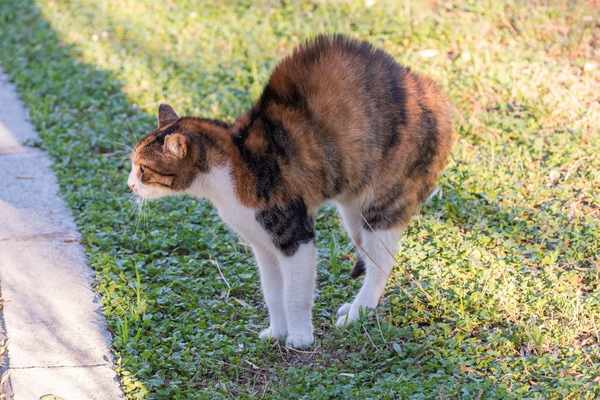
Finding urine outside the litter box is frustrating, but the location is only part of the story. Spraying is mainly a marking behavior, while ordinary urination is bladder emptying in an unwanted place. They can look similar afterward, yet they often point to different causes and solutions.
When comparing cat spraying vs peeing, how to tell the difference comes down to posture, surface, urine amount, and pattern. Watching the behavior directly is ideal, but you can often reconstruct what happened from the evidence around the house.
The Fastest Way to Tell Spraying From Peeing
Spraying usually happens while the cat is standing
A cat that sprays typically backs up to a surface, remains standing, raises the tail, and may quiver or twitch the tail while releasing a relatively small amount of urine. The target is often vertical, such as a wall, door, chair leg, curtain, cabinet, or furniture. This is classic cat urine spraying: the urine is being placed where its scent can communicate with other cats.
Spraying is associated with cat marking territory, but it does not necessarily mean dominance. Marking can appear when a cat feels socially unsettled, sees outdoor cats, encounters unfamiliar smells, or experiences changes such as a new pet, person, or home.
Peeing usually involves squatting
A cat that is urinating normally will usually squat over a horizontal surface. The resulting puddle is often larger because the cat is emptying more of the bladder rather than depositing a small scent mark. Common locations include carpet, beds, laundry, bath mats, sofas, sinks, or floors.
This pattern can suggest a litter-box problem, surface preference, increased urine production, pain, urgency, mobility difficulty, or another medical issue. It should not automatically be treated as behavioral.
Use Four Clues Instead of Judging by Smell
Urine odor can be strong in either situation, so smell is not a reliable way to tell them apart. Compare four details: body posture, target surface, volume, and repetition.
With spraying, the cat generally stands, directs urine backward, leaves a smaller amount, and may repeatedly mark significant places. With ordinary urination outside the box, the cat generally squats, leaves a larger puddle, and often chooses a horizontal surface. The location may reflect litter preference, access, softness, or litter-box discomfort.
There are exceptions. A marking cat can use a horizontal surface, and a cat with a medical or litter-box problem can urinate near a wall. One clue should never outweigh the whole pattern.
A Practical At-Home Scenario
Imagine you discover urine beside the front window every few days. The mark is low on the curtain and wall, the amount is small, and your cat often watches neighborhood cats through that window. That combination strongly favors marking. Blocking the view of unfamiliar cats, reducing social stress, cleaning the marked area thoroughly, and discussing the behavior with your veterinarian would make more sense than simply changing litter brands.
Now imagine the same cat leaves a large puddle on a bath mat while squatting, starts visiting the litter box more often, and seems uncomfortable. That pattern is more concerning for a urinary or litter-box issue and deserves veterinary attention promptly. If you never catch the behavior, a small home camera aimed at the problem area can reveal posture and triggers.
Why Cats Spray
Urine marking is a communication behavior. Intact cats are especially likely to mark, which is why unneutered cat spraying is common and why neutering often reduces hormone-driven spraying. Neutered males and spayed females can still spray, however, particularly when environmental or social stress is involved.
Triggers include tension between household cats, outdoor cats near windows, routine changes, unfamiliar smells, and insufficient resources. Punishment can increase fear and may worsen cat behavior issues.
A natural related resource here would be an internal guide about healthy litter box setup for cats.
Why Cats Pee Outside the Litter Box
Squatting outside the box has several possible causes. Some cats dislike the box location, litter texture, cleanliness, size, or cover. Others prefer soft surfaces such as bedding or carpet. Older cats may struggle with a high-sided or distant box because of pain or reduced mobility.
Medical causes matter just as much. Lower urinary tract problems can cause frequent, painful, or urgent urination. Conditions that increase thirst and urine production, including kidney disease, diabetes, and hyperthyroidism, can also contribute to house soiling. A cat may look otherwise normal while still having a medical problem.
Another useful internal topic would be why cats stop using the litter box, especially for repeated accidents rather than scent marking.
When Urination Outside the Box Needs a Vet
Any new or persistent change in urination deserves veterinary attention, even when spraying seems likely. A physical examination and appropriate testing can help separate medical disease from marking or litter-box causes.
Seek urgent veterinary care if your cat repeatedly strains to urinate, produces little or no urine, cries while trying to urinate, or becomes increasingly distressed. Urethral obstruction is an emergency, particularly in male cats. Do not assume a cat is being spiteful; house soiling and marking are signals that something about health, environment, or toileting setup needs attention.
What to Do After You Identify the Pattern
If the evidence points to spraying, look for triggers near the marked areas. Reduce visual contact with outdoor cats when relevant, provide separate resources in multi-cat homes, maintain predictable routines, and clean urine thoroughly so residual odor does not encourage repeat marking. If your cat is not neutered or spayed, discuss that with your veterinarian.
If the evidence points to ordinary urination, review the litter-box setup while arranging a veterinary check. Many cats prefer clean, easily accessible boxes with unscented litter and enough room to turn comfortably. A related internal guide on how to clean cat urine safely would also fit naturally here.
Frequently Asked Questions
Can a neutered cat still spray?
Yes. Neutering reduces hormone-related marking, but neutered cats can still spray because of stress, social tension, territorial concerns, or environmental changes.
Does spraying always happen on walls?
No. Vertical surfaces are typical, but urine marking can occasionally occur on horizontal surfaces. Posture, amount, location, and repeated behavior should be considered together.
Is a large puddle more likely to be pee than spray?
Usually, yes. A larger puddle on a horizontal surface is more consistent with bladder emptying, especially if the cat squatted. Small deposits on vertical objects are more typical of spraying.
Should I take my cat to the vet if I think it is only spraying?
Yes, particularly if the behavior is new, persistent, or accompanied by changes in urination. Medical problems and behavioral marking can overlap, so ruling out illness is an important first step.
The Bottom Line
The clearest distinction is behavioral: spraying usually involves standing, a raised or quivering tail, a small amount of urine, and a marking target; peeing usually involves squatting and leaving a larger amount on a horizontal surface. Once you identify the pattern, you can investigate the right causes instead of treating every accident as the same problem. Whenever urination changes suddenly or your cat strains to pass urine, involve a veterinarian rather than relying on behavior clues alone.