
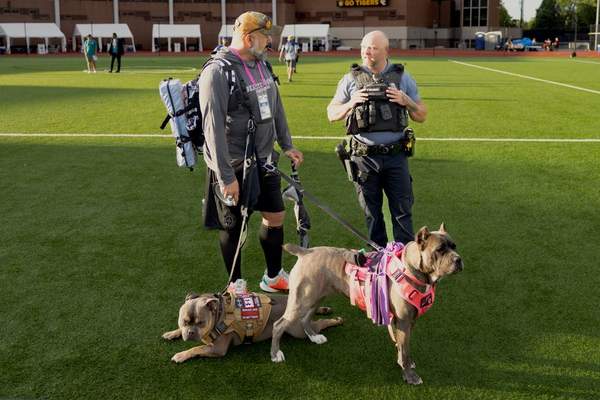
Cane Corsos attract experienced owners for good reason: they are intelligent, loyal, physically powerful, and naturally watchful. A well-raised Corso needs clear everyday skills, calm exposure to the world, and enough confidence to handle unfamiliar people, dogs, noises, and situations without treating everything as a threat.
The most useful way to think about Cane Corso training and socialization is not “make the dog friendly with everyone.” For a guardian breed, the better goal is neutrality. Your dog should be able to notice a stranger, cyclist, delivery van, visiting child, or unfamiliar dog and remain responsive to you. Socialization builds steadiness, while training gives that steadiness a practical structure.
Start Cane Corso Puppy Training Early
Young puppies learn constantly, so begin as soon as your puppy comes home. Teach their name, recall, sit, down, leave it, drop it, and a simple place or mat behaviour. These skills become more valuable as the dog grows stronger.
Keep sessions short and successful. A few focused minutes several times a day is often more productive than one long session. Use food, toys, praise, and access to things your puppy wants as rewards. Modern veterinary behaviour guidance supports reward-based training and discourages methods that rely on pain, fear, intimidation, or harsh physical corrections.
Consistency matters more than strictness. If jumping on people will not be acceptable in an adult dog, do not encourage it because the puppy is small. If waiting at doors is part of your household routine, teach it from the beginning. Clear rules help a fast-growing dog understand what earns access to attention, walks, food, play, and exciting environments.
Socialization Means Calm Exposure, Not Forced Interaction
The first months of a puppy’s life are especially important for learning how the world works. That makes early guardian breed socialization a priority, but more exposure is not automatically better. A Cane Corso puppy does not need to greet every person or play with every dog, and pushing a cautious puppy into close contact can reduce confidence rather than build it.
Expose your puppy to different people, surfaces, sounds, locations, vehicles, handling routines, and calm animals at a distance where the puppy can still eat, explore, and respond to you. Pair new experiences with something pleasant. If the puppy becomes stiff, stops taking food, hides, barks repeatedly, or cannot disengage, increase the distance and make the situation easier.
Build Neutrality Around Strangers
A stable Cane Corso temperament may include natural reserve with unfamiliar people. The goal is not to erase that trait. Reward checking in with you, walking past people calmly, resting while guests talk, and settling behind a gate when the front door opens.
For example, when a delivery driver arrives, do not let the puppy rush the doorway. Place the puppy behind a barrier or on a mat several feet away, reward calm observation, and keep the routine predictable. Repetition teaches that someone approaching the home does not require an explosive response.
Choose Dog Interactions Carefully
Good socialization with dogs is about quality, not volume. Controlled meetings with calm, socially appropriate dogs are generally more useful than chaotic group play. Supervise closely and allow breaks. Busy dog parks are a poor substitute for thoughtful socialization, especially when you do not know the behaviour or health status of the other dogs.
Because infectious-disease risk varies by area and vaccination status, ask your veterinarian how to balance early experiences with disease prevention. Well-run puppy classes can help when health protocols, group size, and training methods are appropriate.
Teach Boundaries Before Strength Becomes the Main Problem
A mature Cane Corso can be difficult to manage if leash manners, impulse control, and household boundaries were postponed. Practise loose-leash walking, waiting briefly at doors, coming away from distractions, settling while people eat, and moving to a designated place on cue.
Management is part of training. Baby gates, a crate or pen, a leash indoors during high-energy moments, and a quiet mat can prevent unwanted habits from becoming rehearsed. Related topics such as large-breed puppy development, positive reinforcement dog training, and safe puppy socialization also make useful internal reading paths for owners building a complete care routine.
Build Confidence Through Small Wins
Confidence-building should be gradual. Introduce one manageable challenge, allow the dog to investigate, reward curiosity, and stop before the puppy becomes overwhelmed. Walk across a different surface, watch traffic from a comfortable distance, hear a household sound at low volume, or practise calm handling of paws, ears, and mouth.
Do not confuse flooding with bravery. A puppy that freezes in a crowded place is not necessarily learning to cope just because they remain there. Reduce the intensity until the dog can think, move, eat, and respond again. This matters greatly with a powerful guardian breed, because fear and over-arousal become harder to manage at adult size.
Expect a New Training Phase During Adolescence
A young Corso may become more alert, more independent, and less reliable around distractions during adolescence. Treat this as a normal training challenge rather than a reason to become harsher. Increase distance from difficult triggers, use better rewards, shorten sessions, and reinforce the same rules you established earlier.
Continue socialization beyond puppyhood. Regular walks in varied environments, structured visitors, cooperative veterinary handling, and carefully selected dog-to-dog experiences help maintain confidence and responsiveness as the dog matures.
When Professional Help Makes Sense
Seek qualified help early if your Cane Corso shows persistent fear, escalating guarding, repeated lunging, snapping, resource guarding, or difficulty recovering after common triggers. Choose a trainer or veterinary behaviour professional who uses reward-based methods and can explain both safety management and behaviour change. Early support is especially valuable with a breed whose size can magnify small handling problems.
Frequently Asked Questions
When should Cane Corso training begin?
Begin as soon as your puppy comes home. Focus first on recall, calm handling, settling, leash foundations, household routines, and simple cues. Keep training positive and woven into everyday life.
How much socialization does a Cane Corso puppy need?
They need frequent, varied, positive exposure rather than nonstop interaction. Prioritise calm experiences with different people, environments, sounds, surfaces, and suitable dogs without overwhelming the puppy.
Should a Cane Corso be friendly with every stranger?
No. Calm neutrality is a better goal. A well-socialized Corso can notice unfamiliar people without panicking, lunging, or demanding contact while remaining responsive to the owner.
What is the best training method for a Cane Corso?
Reward-based training is the strongest foundation. Reinforce the behaviours you want, manage situations that are too difficult, and avoid intimidation or painful corrections. Humane training and clear boundaries work well together.
Build the Adult Dog Through Everyday Repetition
Cane Corso training works best when obedience, socialization, management, and confidence-building are treated as one connected process. The puppy who learns to pause at a doorway, settle while visitors enter, walk past another dog without pulling, and look back to you when something unusual happens is practising the skills that matter in adulthood. Start early, keep expectations consistent, reward good choices, and continue the work as your Corso matures. The goal is not to remove natural guardian instincts, but to help the dog live with them in a controlled, dependable way.