
Put a gorilla and a chimpanzee side by side, and the size difference is obvious. Yet their most revealing differences are not simply physical. Both are intelligent African great apes, but they find food, organise relationships and respond to neighbours in different ways. A gorilla troop often revolves around a protective silverback; a chimpanzee community repeatedly splits into smaller travelling parties. That contrast makes the gorilla vs chimpanzee comparison more interesting than a hypothetical contest of strength.
Gorilla vs Chimpanzee: Essential Differences
Gorillas are the largest living primates, with two recognised species: western and eastern gorillas. The common chimpanzee is another great-ape species, Pan troglodytes. Bonobos are close relatives, not another name for common chimpanzees.
The main gorilla chimp differences involve body build, diet and social organisation. Gorillas are generally heavier and rely more on fibrous vegetation. Chimpanzees are smaller, highly agile and regularly use tools in many wild populations. Both have complex personalities rather than predictable, fixed temperaments.
Size, Strength and Appearance
An adult male gorilla may weigh roughly 140–200 kilograms, depending on species and individual; exceptionally large animals can exceed that range. Wild adult male chimpanzees commonly weigh around 34–70 kilograms. Females of both apes are smaller, and captive animals can have different body weights.
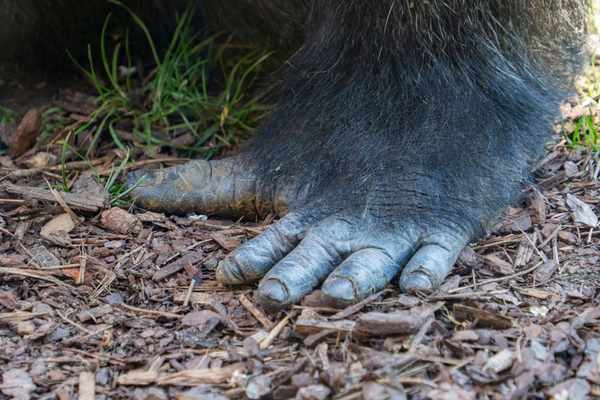
Gorillas have broad chests, heavy shoulders, prominent brow ridges and powerful jaws. Mature males develop silver-grey hair across their backs, earning the name silverback. Chimpanzees have leaner bodies, long arms, mobile lips and hands suited to climbing and manipulating objects.
Gorillas have the advantage in sheer body mass, but dramatic online claims about exact strength ratios are rarely backed by reliable measurements.
Movement: Ground and Canopy
Both apes usually travel on their knuckles on the ground and can briefly walk upright. Chimpanzees spend substantial time climbing, building sleeping nests in trees and reaching fruit among branches. Gorillas, especially large silverbacks, spend more time on the ground, although youngsters and smaller adults climb too.
A heavy silverback cannot use a slender branch like a lighter chimpanzee. Watching where an ape feeds can therefore tell you more than watching it walk.
Diet: Vegetation, Fruit and Meat
What Gorillas Eat
Gorillas primarily eat plants: leaves, shoots, stems and fruit. The balance varies by habitat. Western lowland gorillas consume substantial seasonal fruit, whereas mountain gorillas rely heavily on leafy vegetation. Some gorillas also eat small invertebrates. Describing every gorilla as an exclusive leaf-eater misses this variation.
What Chimpanzees Eat
The chimpanzee diet includes fruit, leaves, seeds, flowers and insects. Chimpanzees sometimes cooperatively hunt other mammals, including monkeys, and share meat. Meat is not their everyday staple.
Food influences travel. A chimpanzee may move between scattered fruiting trees, while a gorilla troop can spend extended periods feeding on plentiful ground-level plants. Both adjust their behaviour as food availability changes.
Social Life: Stable Troops and Flexible Communities
Gorilla Social Groups
Many gorilla social groups contain a dominant silverback, adult females and offspring. The silverback often guides movement, mediates disputes and protects the group. Some groups include additional adult males, while solitary males and all-male groups also exist. Females’ relationships and individual personalities are important parts of troop life.
Chimpanzee Communities
Chimpanzees live in larger communities with a fission–fusion system: members separate into smaller parties, then reunite in changing combinations. Males commonly remain in their birth community, forming alliances and negotiating dominance. Females often transfer to another community as they mature.
These arrangements shape great ape behavior. A gorilla youngster may stay near a fairly consistent set of companions. A chimpanzee may encounter different community members at successive feeding sites, making social memory and alliances especially valuable.
Communication, Conflict and Affection
Gorillas communicate through grunts, postures, facial expressions and chest beats. Chest beating can advertise a male’s presence or competitive ability; it does not automatically signal an imminent attack. Play and reassuring contact also help maintain bonds.
Chimpanzees communicate through expressions, gestures, grooming and calls, including distinctive pant-hoots. Grooming supports friendships and alliances, while calls can coordinate activity across a forest. Some chimpanzee communities show severe territorial aggression, but chimps also comfort companions and maintain long friendships.
Neither species is simply peaceful or violent. Individual history and circumstances matter more than a dramatic wildlife clip.
Intelligence and Tool Use
Chimpanzees may fish for termites with twigs, crack nuts using stones or wood, and make leaf sponges for water. Techniques vary among communities and can be learned socially, showing that different populations have distinct tool traditions.
Gorillas solve problems, learn from others and sometimes use tools, although habitual tool use is documented less frequently in wild populations. Counting tools alone is a poor measure of intelligence: each ape faces different practical challenges.
Our guide to great ape species offers further context for their evolutionary relationships.
Habitat, Range and Conservation
Gorillas inhabit equatorial African forests, including lowland rainforest and high-elevation mountain forest. Common chimpanzees occur across parts of West and Central Africa into East Africa, using rainforests, woodlands and forest–savanna mosaics. Their ranges overlap in some places, but they do not form shared social groups.
Both face habitat loss, hunting and infectious disease. Chimpanzees are endangered; gorilla conservation status depends on the species or subspecies, several of which are critically endangered. Protected habitats, connected forest corridors and disease precautions all matter.
What to Notice in Wildlife Footage
Try comparing feeding scenes rather than displays of strength. Does a silverback’s troop remain together near leafy food? Do chimpanzees arrive at a fruiting tree in separate parties? Listen for gorilla contact sounds versus chimpanzee pant-hoots. These clues reveal how food and social life fit together.
Related reading on animal communication signals and rainforest mammals can broaden the comparison. In the wild, follow trained guides’ distance rules and never approach or feed great apes.
Frequently Asked Questions
Is a gorilla stronger than a chimpanzee?
A typical adult male gorilla is much larger and more heavily built, giving it a substantial advantage in absolute strength. Precise strength multipliers circulated online are not well established.
Are chimpanzees smarter than gorillas?
There is no straightforward overall ranking. Chimpanzees show varied wild tool traditions, while gorillas demonstrate memory, social learning and problem-solving. Different tasks test different abilities.
Do gorillas and chimpanzees live together?
They share parts of their geographical range and may use the same wider forest habitat. They do not ordinarily form mixed social groups.
Which ape is more aggressive?
Both can be dangerous if threatened. Chimpanzees sometimes engage in intense territorial conflict, while gorillas may charge to defend themselves or their troop. Neither pattern describes every animal.
Conclusion
The clearest gorilla vs chimpanzee difference is not muscle versus brains. Gorillas combine exceptional size with often cohesive, silverback-centred troops and largely plant-based diets. Chimpanzees combine agility, flexible communities, varied feeding and widespread tool traditions. Each reveals a different form of great-ape intelligence.