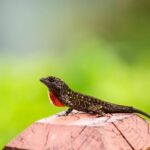
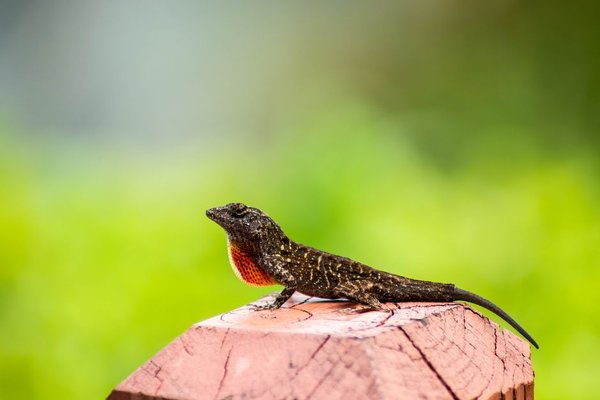
Green anoles are tiny, quick-moving lizards that spend much of their day climbing, basking, and watching for insects. Their modest size can make them look like easy pets, but successful green anole care depends on recreating several features of a warm, leafy habitat at once. A suitable enclosure is not simply a tank with a branch: it needs height, bright light, safe heat, moisture, and room to retreat.
The green anole (Anolis carolinensis) is native to the southeastern United States. It may change from vivid green to brown depending on temperature, light, activity, and other factors. Colour alone is not a reliable health check. Watching how the animal moves, eats, basks, and uses its environment tells you much more.
Build a Green Anole Habitat Around Climbing
A single adult should have a well-ventilated enclosure measuring at least 24 by 24 by 24 inches (60 by 60 by 60 cm); larger, especially taller, is welcome. Front-opening access is useful because reaching down from above can frighten a lizard accustomed to watching for predators. A secure screen top and escape-proof doors are essential.
Arrange sturdy branches at several heights, not just one decorative perch. Place a basking branch near the upper warm zone, crossing vines through the middle and dense foliage lower down. This creates paths between light, shade, and shelter. Leave some open space for hunting rather than filling every inch with plants.
Plants, Substrate, and Cover
Choose verified reptile-safe, pesticide-free plants, such as suitable pothos or spider plants, and wash them before installation. Live foliage offers leaf surfaces for drinking and helps create sheltered microclimates. Artificial leaves can supplement cover, but they should be easy to clean and have no sharp edges.
A moisture-retentive, reptile-safe tropical substrate can support plants and humidity, provided it does not remain waterlogged. Remove droppings and dirty material promptly. Anyone planning a planted setup may also benefit from a guide to bioactive reptile enclosures, especially for drainage and plant maintenance. Keep the enclosure ventilated even when moisture is high.
Set Up Green Anole UVB and Daylight Correctly
Green anoles are active by day and need appropriate UVB exposure to support vitamin D production and calcium metabolism. A proper reptile UVB fixture is different from an ordinary household LED. Most window glass blocks useful UVB, so placing a terrarium beside a sunny window does not replace specialised lighting and may cause overheating.
A quality linear UVB tube is a practical choice. The appropriate output and distance depend on the bulb, reflector, mesh, and height of the basking branch; follow the manufacturer’s species-specific guidance and ideally verify exposure with a reptile UV meter. Provide shaded areas so the lizard can choose how much light it receives. A dedicated reptile UVB lighting guide can help explain this positioning.
Add bright visible lighting for daytime activity and plant growth. Run the daytime lights on a consistent timer, commonly around 12 hours daily, with seasonal adjustments if appropriate. All visible lights should go off at night. Replace UVB bulbs according to the manufacturer’s instructions, even if they still appear bright.
Create a Safe Basking and Cooling Gradient
Use a guarded overhead heat lamp to establish a basking surface around 90°F (32°C), while allowing cooler areas around 70–77°F (21–25°C). Nighttime temperatures around 65–75°F (18–24°C) are generally suitable for healthy adults. The lizard must be able to move between zones rather than being heated uniformly.
Measure the actual basking branch with a suitable thermometer and monitor cooler air with a second digital probe. Thermostat control adds protection against overheating. Keep hot fixtures beyond reach: anoles can cling to screen tops, and an exposed lamp can burn them. Avoid heated rocks and coloured night bulbs.
Balance Green Anole Humidity With Fresh Air
Green anole humidity should generally average about 60–70% during the day, with natural rises after misting and at night. Exact readings fluctuate; the goal is a healthy pattern, not a permanently wet tank. A digital hygrometer in the middle of the enclosure gives more useful information than guessing from condensation.
Mist foliage with clean water as needed, often morning and evening, so the lizard can drink droplets. Allow surfaces to dry between sessions and prevent standing water in the substrate. If leaves stay soaked all day or the glass constantly fogs, improve airflow and adjust misting. A practical guide to humidity management in tropical terrariums can help troubleshoot seasonal changes.
For example, if winter heating dries the room, check readings before automatically doubling misting. You might need moisture-retentive substrate and denser foliage, while preserving ventilation. Record morning and evening humidity for several days and change one factor at a time.
Feed a Varied Green Anole Diet
Green anoles mainly eat live insects. Offer appropriately sized crickets, small roaches, black soldier fly larvae, and other suitable feeders in rotation. Prey should generally be smaller than the width of the lizard’s head. Avoid wild-caught insects that may carry pesticides or parasites.
Juveniles usually need food daily; many healthy adults do well with meals every other day. Adjust quantities to body condition, appetite, and veterinary advice rather than following a rigid insect count. Gut-load feeders with nutritious food before offering them, and use a reptile-appropriate calcium and vitamin supplement according to its label and your veterinarian’s advice. Over-supplementation can also cause problems.
Provide fresh water in a clean, accessible dish even though anoles often prefer droplets on leaves. Remove uneaten insects so they do not disturb the lizard. Persistent refusal of food, weight loss, or difficulty catching prey warrants attention.
Handling, Cleaning, and Health Checks
Most green anoles are better appreciated as display animals than handled pets. Frequent grabbing can cause stress, escape attempts, or tail loss. Let a new arrival settle, approach slowly, and try offering insects with soft-tipped tongs to build familiarity. Keep anoles individually unless an experienced keeper has a carefully managed reason to do otherwise; territorial disputes are a real concern.
Each day, check temperatures and humidity, inspect the animal, refresh water, remove waste, and confirm that lights and equipment work. Clean feeding surfaces regularly and replace contaminated substrate. Arrange an examination with a reptile-experienced veterinarian if you see ongoing lethargy, swollen joints, poor grip, wheezing, abnormal shedding, or sustained appetite loss.
Green Anole Care FAQs
Do green anoles need a UVB light?
Yes. Properly positioned UVB supports healthy calcium metabolism. It works alongside appropriate heating, diet, and supplements rather than replacing them.
How often should I mist a green anole enclosure?
Many enclosures benefit from misting once or twice daily, but hygrometer readings, airflow, and drying time should determine the schedule.
Can two green anoles live together?
Individual housing is the safer default. Even small anoles can compete for basking positions, food, and space, sometimes without obvious fighting.
Why is my green anole turning brown?
Colour changes can reflect lighting, temperature, activity, or stress. Check the entire environment and the animal’s behaviour instead of assuming that brown always means illness.
A Habitat That Works Every Day
The most reliable green anole care routine combines a spacious climbing habitat with controlled basking heat, correctly placed UVB, changing but measured humidity, and a varied insect diet. Once those systems work together, daily maintenance becomes simpler.