
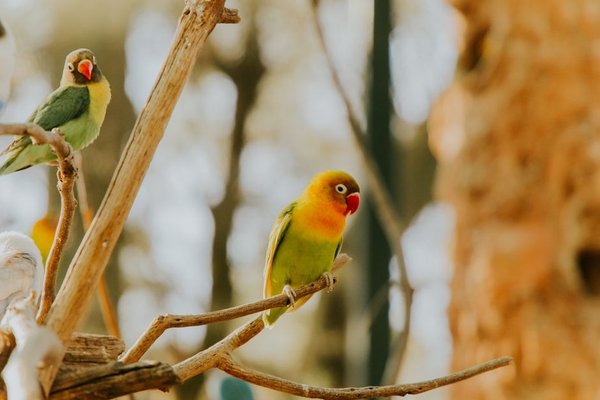
Lovebirds are small parrots with big personalities. They can be affectionate, curious, noisy, busy, and surprisingly determined, so lovebird care for beginners involves much more than buying a cage and filling a bowl with seed. A practical lovebird care guide needs to cover safe housing, balanced nutrition, social contact, sleep, exercise, enrichment, and careful observation. Once those basics are consistent, a lovebird can become an engaging companion whose preferences and daily habits are easy to recognize.
Choose a Cage That Supports Real Movement
A lovebird cage should provide enough horizontal room for hopping, climbing, wing stretching, and short flights. Veterinary guidance commonly gives a minimum around 60 cm by 60 cm by 90 cm for a lovebird, but larger is better, especially when the bird spends significant time inside. Keep the center reasonably open instead of filling every gap with toys and perches.
Use a sturdy, bird-safe cage with secure doors. Place it where the bird can see normal household activity without being exposed to kitchen fumes, smoke, aerosols, direct heating or cooling vents, or constant drafts. Offer perches of different safe diameters and textures, positioning food and water where droppings cannot fall into them. A higher perch can become a comfortable sleeping spot.
Build a Balanced Lovebird Diet
A seed-only lovebird diet is not nutritionally complete. Current veterinary guidance favors a formulated pellet as the main food, with vegetables and smaller amounts of fruit providing variety. Seeds can still be used in limited quantities as treats, training rewards, or part of a gradual diet transition, but they should not dominate the bowl.
Suitable fresh foods can include leafy greens, bell pepper, carrot, broccoli, and cooked squash, plus modest portions of bird-safe fruit. Wash produce thoroughly and remove fresh food after a few hours so it does not spoil. Fresh water should always be available, and bowls should be washed every day. Never offer avocado, chocolate, alcohol, or caffeine. Supplements should be given only when an avian veterinarian recommends them, since a balanced pellet-based diet may already supply what the bird needs.
Understand Lovebird Social Needs
The name “lovebird” can make new owners assume that every bird must have a mate. In reality, a single, well-socialized lovebird can bond closely with people when it receives dependable daily interaction. A compatible pair can also thrive together, although paired lovebirds often focus more strongly on each other and may be less interested in human handling.
What matters is avoiding a life of isolation and boredom. Talk to your bird, provide supervised time outside the cage, and offer opportunities to chew, shred, climb, explore, and forage. Paper, bird-safe wood, and simple food-search activities can be more useful than a cage crowded with decorative toys. Rotate enrichment so familiar objects remain interesting.
Lovebird behavior is also highly contextual. A bird that lunges when you reach into its cage may be defending its space rather than becoming “mean.” Move calmly, avoid cornering it, and practice training where the bird feels less defensive. Trust grows when hands predict choice, treats, and safe interaction rather than restraint.
Handle and Train at the Bird’s Pace
With a newly arrived lovebird, start with short, low-pressure sessions. Sit near the cage, speak quietly, and offer a favorite treat. Once the bird is relaxed around your hand, introduce a simple step-up cue. Keep sessions brief and stop while the bird is still comfortable.
For example, chasing a reluctant lovebird around the cage to make it step onto a finger usually teaches it to fear hands. Instead, hold a finger or handheld perch near its feet and reward even a small move toward it. Repeat for a few minutes each day. Progress may take days or weeks, but voluntary training generally produces a calmer, more cooperative bird.
Protect Sleep and Daily Exercise
Most pet parrots benefit from a consistent day-night rhythm with roughly 12 hours of quiet, dark rest. If the main room stays bright and active late at night, a separate sleep cage in a quiet room can help. Keep bedtime and morning routines predictable, since prolonged light and disrupted sleep can contribute to hormonal behavior in some birds.
During the day, provide safe opportunities for flight and exercise whenever possible. Before opening the cage, close doors and windows, switch off ceiling fans, remove obvious hazards, and keep cats and dogs out of the room. Out-of-cage activity should be a normal part of the routine rather than a rare event.
Learn What Healthy Looks Like
Birds can hide illness, so everyday observation matters. Learn your lovebird’s normal appetite, activity, droppings, vocalization, posture, and body weight. Sudden lethargy, staying fluffed up for long periods, labored breathing, persistent tail bobbing, repeated vomiting, or a marked change in eating deserves prompt veterinary attention.
Arrange an initial examination with an avian veterinarian soon after bringing a new bird home and continue with routine wellness checks. This is also the right place to confirm diet, weight, nail care, and sex-specific concerns such as egg laying.
Frequently Asked Questions
Can a lovebird live alone?
Yes. A single lovebird can do well when it receives reliable daily social interaction, enrichment, exercise, and attention. If the household is empty for long periods every day, consider carefully how its social needs will be met.
What should a beginner feed a lovebird?
A formulated pellet should generally form the foundation of the diet, supported by suitable vegetables, limited fruit, and small amounts of seeds or treats. Make major diet changes gradually and confirm that the bird is actually eating the new food.
How much sleep does a lovebird need?
A routine providing about 12 hours of quiet darkness is a useful target for many pet parrots. Individual birds vary, but consistent, uninterrupted rest is more appropriate than keeping a bird awake to match a late household schedule.
Do lovebirds need toys?
Yes. Lovebirds benefit from toys and activities that support chewing, shredding, climbing, and foraging. Inspect toys regularly and replace damaged items that develop sharp edges, loose threads, or entanglement risks.
Give Your Lovebird a Routine It Can Trust
Good lovebird care comes down to consistency: a roomy safe environment, balanced food, daily social contact, exercise, enrichment, dependable sleep, and regular health monitoring. Pay attention to the individual bird rather than expecting every lovebird to behave the same way. When you learn its normal signals and respect its boundaries, daily care becomes easier and the relationship becomes more confident and rewarding.