
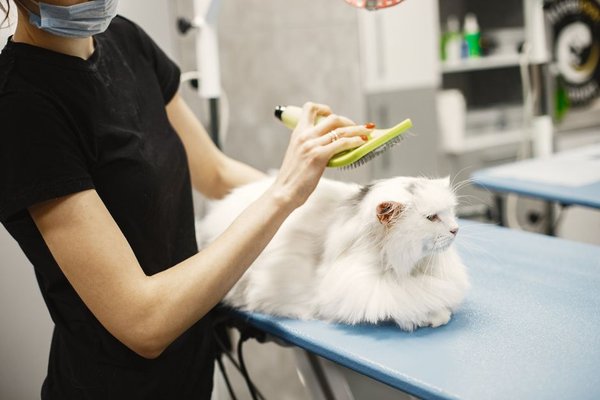
Long-haired cats are beautiful, but their coats can turn a missed grooming session into knots, loose undercoat, and uncomfortable mats surprisingly quickly. The best brush for long haired cats is not always one single tool. For most owners, the most effective setup combines a gentle slicker for everyday grooming with a metal comb for checking the coat, while a dedicated deshedding brush is used when loose undercoat builds up.
That approach suits Persians, Maine Coons, Ragdolls, Domestic Longhairs, and other cats with dense or silky coats. Long haired cat grooming should remove loose fur without scraping the skin or repeatedly pulling at tangles. The right choice depends on coat density, matting tendency, and whether your main problem is shedding, knots, or sensitive areas.
Best Brushes for Long-Haired Cats by Grooming Need
Chris Christensen Top Cat Slicker Brush: Best Overall for Daily Grooming
The Chris Christensen Top Cat Slicker is a strong premium choice for owners who want a cat-specific everyday brush. Its smaller grooming heads and 17 mm stainless-steel pins are designed for feline coats, while tiny and triangular versions can reach areas such as behind the ears and under the legs.
This is useful for cats that develop wispy tangles around the chest or armpits. A slicker should glide through small sections rather than be dragged through resistance. If you feel a snag, stop and work from the end of the tangle instead of pulling from the skin.
FURminator Undercoat deShedding Tool for Long-Hair Cats: Best for Heavy Shedding
For seasonal shedding or a dense undercoat, the FURminator long-hair cat deShedding tool is a specialized option. Its stainless-steel edge is designed to reach through the topcoat and remove loose undercoat, and the current range includes long-hair versions for smaller cats and cats over 10 pounds.
This is not a replacement for daily brushing, and it should not be run through mats. FURminator advises brushing tangles out first and using the tool on a dry coat. A deshedding brush is most useful when you can already pass a comb through the coat without catching.
FURminator Finishing Comb: Best for Minor Tangles and Coat Checks
A long-toothed metal comb is one of the most practical tools in long hair cat care because it reveals what a brush may miss. Veterinary grooming guidance notes that long-toothed metal combs and brushes with offset tines can help remove loose hair and smooth minor tangles in medium- and long-haired cats.
The FURminator Finishing Comb uses rounded, rotating stainless-steel tines and is intended for long, silky, curly, or wiry coats. Use it after brushing, then check the belly, armpits, trousers, and area behind the ears. If the comb reaches the skin without snagging, the coat is much closer to truly tangle-free.
A Long-Tooth Stainless-Steel Cat Comb: Best Budget Essential
You do not need an expensive tool for every stage. A sturdy metal comb with longer, rounded teeth is often the best-value purchase for a long-haired cat. Look for smooth teeth with no sharp seams and a size you can control easily.
For example, if your Ragdoll looks smooth after brushing but repeatedly mats behind the back legs, comb that area every evening for 30 to 60 seconds. Catching a pea-sized tangle early is far easier than waiting until it becomes a dense mat. This small habit can make cat mat removal much less frequent.
FURminator Sensitive Areas Tool: Best for Delicate Spots
Some cats tolerate brushing along the back but dislike firmer tools near the belly, paws, ears, or sanitary area. A flexible-bristle tool can help maintain these zones without the pressure of a deshedding edge. FURminator’s Sensitive Areas Tool is designed for delicate locations and can be useful for nervous cats.
How to Choose the Right Brush for Your Cat
Coat texture matters more than breed name alone. A silky Persian that tangles easily may benefit most from a slicker plus comb, while a thick-coated Maine Coon that sheds heavily may also need periodic undercoat removal. Prioritize rounded or flexible working surfaces, a head small enough to control, and a handle that lets you use light pressure.
Avoid buying a tool simply because it promises maximum hair removal. Removing loose fur is useful; scraping or repeatedly pulling healthy coat is not. If your cat flinches, the skin twitches repeatedly, or the brush catches instead of gliding, reduce pressure or change tools.
A Better Grooming Routine for Long-Haired Cats
Long-haired cats generally benefit from daily brushing or combing, especially in friction areas where mats form quickly. Start with a gentle brush to separate the coat, then use a metal comb to check your work. Use a deshedding tool only when the coat is already free of tangles and loose undercoat is the real problem.
Keep sessions calm and short. Brush one area while your cat is relaxed, reward cooperation, and finish before irritation starts. Related internal topics that fit naturally here include cat grooming schedule, how to bathe a long-haired cat, and hairball prevention for cats.
What to Do About Mats
Small tangles may sometimes be eased apart with a comb or dematting tool, but tight or widespread mats need caution. Veterinary guidance warns against cutting mats out with scissors because feline skin can be pulled into the mat and accidentally cut. If a mat is tight to the skin, painful, extensive, or your cat will not tolerate handling, a veterinarian or experienced cat groomer is the safer choice.
Frequently Asked Questions
How often should I brush a long-haired cat?
Daily brushing or combing is a sensible goal for many long-haired cats, especially those prone to mats. Even a few minutes focused on the armpits, chest, belly, trousers, and behind the ears can prevent small tangles from becoming difficult mats.
Is a slicker brush or deshedding brush better for long-haired cats?
A slicker is generally more useful for routine grooming and light tangles, while a deshedding brush targets loose undercoat. Many long-haired cats benefit from both, but the deshedding tool should be used less frequently and only on a tangle-free coat.
Can I use a human hairbrush on my long-haired cat?
A human brush may smooth the surface but often does not reach through a dense feline coat well enough to find developing tangles. A cat-appropriate slicker or long-toothed metal comb is usually more effective.
What is the safest way to remove a stubborn mat?
Do not pull hard or cut close to the skin with scissors. If gentle combing does not release the mat, or the skin is irritated, arrange professional grooming or veterinary help rather than risking injury.
Which Brush Should You Buy?
For most long-haired cats, start with a well-made slicker and add a stainless-steel comb. Choose the Chris Christensen Top Cat Slicker if you want a premium daily brush with cat-sized options, or the FURminator long-hair deShedding tool if seasonal undercoat is your biggest problem. Keep a comb as the final check, because a coat that looks smooth can still hide tangles near the skin. The best routine is the one that keeps the coat comfortable and gentle enough that your cat will accept it regularly.