Basic obedience is less about making a dog perform on command and more about building a shared language. A few reliable cues can make walks calmer, prevent dangerous choices and help your dog understand everyday expectations. The best training is short, consistent and reward-based, using treats, praise or play to reinforce desired behaviour.
Start in a quiet room before adding distractions. Say each cue once, give your dog a moment to respond, then reward success immediately. If your dog struggles, make the exercise easier rather than repeating the word louder. Five focused minutes can be more productive than a long session in which both of you become frustrated.
1. Sit
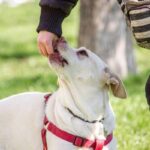
“Sit” is one of the easiest behaviours to teach and becomes the foundation for polite greetings, waiting at doors and settling before meals. Hold a small treat close to your dog’s nose, then move it slowly up and slightly back over the head. As the nose follows the treat, the hindquarters will often lower naturally.
The moment your dog sits, mark the behaviour with a word such as “yes” and give the treat. After several successful repetitions, say “sit” just before making the hand movement. Gradually reduce the lure until your dog responds to the verbal cue or a simple hand signal.
2. Down
“Down” is useful when you need your dog to settle for longer periods. From a standing or sitting position, bring a treat to the dog’s nose, lower it toward the floor and then move it slightly forward. Reward as soon as the elbows and body reach the ground.
Practise from different starting positions so your dog learns that “down” means lying down rather than simply performing the next step after “sit.” Keep early repetitions easy and avoid physically pushing the dog into position.
3. Stay
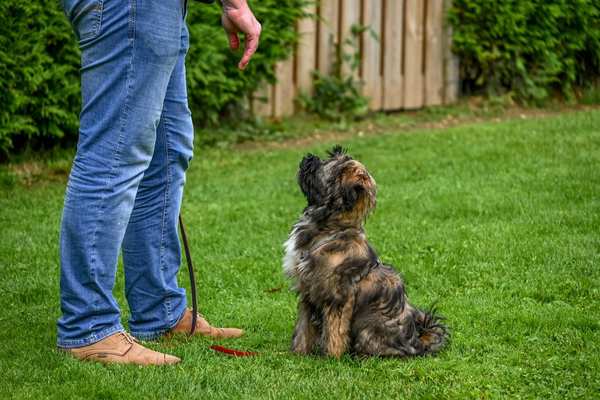
A reliable stay teaches duration and self-control. First choose a clear release word such as “free” or “okay.” Ask for a sit or down, pause for one second, reward while your dog is still in position, then give the release cue.
Build difficulty slowly. Increase time before distance, and distance before distractions. Taking three steps away in a busy park is much harder than waiting three seconds in the kitchen. If your dog gets up, calmly reset and make the next repetition easier. A strong stay should mean remaining in place until released, not simply pausing for a moment.
4. Come
Recall training is one of the most important safety skills a dog can learn. Begin indoors or in a securely fenced space. Move a short distance away, say your dog’s name followed by “come,” then encourage movement toward you with an upbeat voice. Reward generously when your dog reaches you.
Never punish a dog for coming to you, even if the response was slow or the dog was doing something annoying beforehand. You want arriving at your side to feel consistently worthwhile. Outdoors, use a long training line until recall is dependable around distractions. Do not rely on an unproven recall near roads, livestock or other serious hazards.
5. Leave It
“Leave it” means do not take or investigate something. It can help with dropped food, rubbish, wildlife and objects that may be unsafe. Place a low-value treat in a closed fist and let your dog sniff. Wait quietly. The instant the dog backs away or looks elsewhere, mark the choice and reward with a different treat from your other hand.
Progress to an item on the floor covered by your hand, then uncovered items at a safe distance. Reward the decision to disengage. The goal is not to create a battle over the object but to teach that moving away from it earns something better.
6. Drop It
“Drop it” is different from “leave it.” It tells the dog to release something already in the mouth. Start with a toy your dog likes but is not intensely possessive about. Offer a high-value treat near the nose. When the dog opens the mouth to take the treat, say “drop it,” reward, and then often return the toy.
Giving the item back during practice helps prevent the cue from always predicting loss. Avoid chasing your dog or forcibly prying open the mouth, which can turn possession into a game or create conflict. If your dog guards food, toys or stolen objects with growling, snapping or biting, seek help from a qualified reward-based professional rather than practising risky exchanges.
7. Place
“Place” or “go to mat” teaches your dog to move to a specific bed, mat or station and settle there. Put the mat on the floor and reward any interest in it. Then reward stepping onto it, followed by standing, sitting or lying down on the mat. Add the verbal cue only after the dog is reliably moving toward the target.
This skill is especially practical when visitors arrive, food is being prepared or you need the dog away from a doorway. Once the behaviour is established, add duration gradually and use the same release word you use for stay.
How to Make Dog Obedience Training Stick
Dogs do not automatically generalise a cue learned in the living room to the garden, pavement or vet waiting room. Practise in several places and increase distractions gradually. Reward more generously when the environment is difficult.
Keep cues consistent between family members. If one person says “come,” another says “here,” and a third repeats the dog’s name, learning becomes harder. A simple shared vocabulary makes sit, stay, come and the other basics much clearer.
Useful related topics for further training include puppy socialisation basics, loose-leash walking and breed-specific training approaches.
Frequently Asked Questions
How long should a dog training session last?
Short sessions are usually best. A few minutes of focused practice repeated during the day can work better than one long session, especially for puppies or easily distracted dogs.
Should I use treats every time?
Use frequent rewards while teaching a new behaviour. Once the response is reliable, you can gradually vary rewards and include praise, toys or access to something the dog enjoys. New or difficult situations may still deserve high-value treats.
What if my dog ignores a command?
A missed response usually means the dog does not yet understand the cue in that situation, is too distracted or the reward is not motivating enough. Reduce the difficulty and practise where success is easier instead of punishing the dog.
Can an older dog learn basic obedience?
Yes. Adult and senior dogs can learn new behaviours. Training may need to account for hearing, vision, mobility or medical issues, but age alone does not prevent learning.
Build Reliability One Easy Success at a Time
The seven basic obedience commands every dog should know are most valuable when they work in real life, not just during a training session. Sit, down, stay, come, leave it, drop it and place give you practical ways to guide your dog through doors, meals, walks, visitors and unexpected hazards.
Teach each behaviour with rewards, practise one skill at a time and increase difficulty gradually. Consistency matters more than speed. A dog that understands what earns success is far more likely to respond confidently when the cue really matters.