
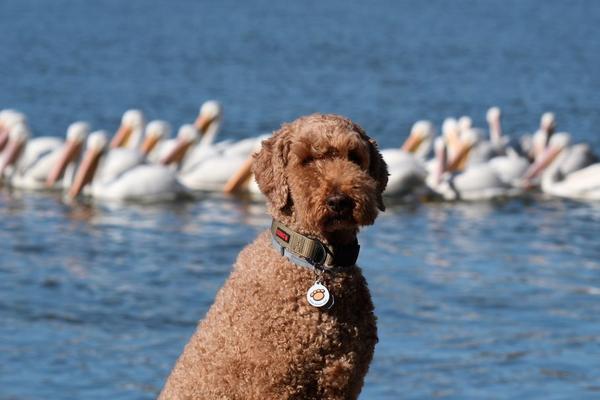
Doodles have moved from niche crossbreeds to some of the most visible family dogs in parks, training classes, and therapy programs. Yet a doodle breeds comparison quickly reveals that the name alone does not predict the dog you will bring home. Goldendoodles, Labradoodles, and Bernedoodles can differ in energy, confidence, coat, adult size, and daily care.
The best choice is not the cutest puppy photo. It is the dog whose likely needs match your household, while leaving room for the unpredictability that comes with any mixed breed.
Goldendoodle vs Labradoodle vs Bernedoodle at a Glance
A Goldendoodle crosses a Golden Retriever with a Poodle. A Labradoodle typically combines a Labrador Retriever and a Poodle. A Bernedoodle combines a Bernese Mountain Dog with a Poodle.
Broadly, Goldendoodles are often people-focused and eager to please, Labradoodles tend to be energetic and outgoing, and Bernedoodles are frequently affectionate with a calmer or more reserved style. These are tendencies, not guarantees. The parents, breeding generation, socialization, and individual puppy matter as much as the mix name.
Temperament: Which Doodle Fits Your Household?
Goldendoodle temperament
Goldendoodles often inherit the Golden Retriever’s friendliness and the Poodle’s attentiveness. Many enjoy meeting people and staying close to their family. They can suit active homes and first-time owners who are committed to training.
The trade-off is that a highly social Goldendoodle may struggle when left alone for long periods. Young dogs can also be excitable, mouthy, and easily distracted. Calm behavior comes from consistent training and sufficient exercise, not from the word “doodle.”
Labradoodle temperament
When comparing a Goldendoodle vs Labradoodle, the Labradoodle often feels more athletic and exuberant. Labrador Retrievers are enthusiastic sporting dogs, and that drive can produce a doodle that loves swimming, retrieving, hiking, and fast-paced games. A well-bred Labradoodle can be cheerful and highly trainable.
This mix may be difficult in a quiet household that wants a naturally low-key dog. Without daily movement and mental work, a Labradoodle may invent its own entertainment through jumping, chewing, or constant attention-seeking.
Bernedoodle temperament
Bernedoodle temperament is commonly described as affectionate, playful, and devoted. The Bernese Mountain Dog influence may add a gentler pace and stronger attachment to familiar people. Some Bernedoodles are less enthusiastic with strangers than Goldendoodles or Labradoodles.
However, they may mature slowly and show sensitivity or independence. A Bernedoodle puppy often responds best to patient, reward-based training and early exposure to everyday experiences.
Size and Space Requirements
All three mixes can be produced in smaller, medium, or standard sizes depending largely on the Poodle parent. Labels such as “mini” are not universally standardized, so ask for the adult weights and heights of both parents rather than trusting a category name.
Goldendoodles and Labradoodles commonly range from compact companions to large, athletic dogs. Standard Bernedoodles may be heavier and more substantial. Apartment living can work if exercise needs are met, but a large dog still needs realistic planning.
Coat, Shedding, and Allergy Reality
No Goldendoodle, Labradoodle, or Bernedoodle is guaranteed to be a hypoallergenic doodle. Dog allergens come from dander, saliva, and other proteins, not simply loose hair. A low-shedding coat may spread less hair around the home, but it can still trigger symptoms.
Coats may be straight, wavy, or curly, with shedding ranging from minimal to noticeable. Even puppies from the same litter can develop different adult coats. Generation labels such as F1 or F1b may offer clues about ancestry, but they do not promise a particular allergy response.
Low shedding also does not mean low maintenance. Wavy and curly coats can mat close to the skin, especially behind the ears, under the collar, around the legs, and beneath a harness. Most doodles need frequent brushing and regular professional grooming.
Exercise, Training, and Service-Dog Potential
Poodles, Golden Retrievers, and Labradors are intelligent working breeds, which helps explain why doodles are considered for therapy or assistance roles. Intelligence alone, however, does not make a service dog. Reliable health, emotional stability, focus in public, recovery from surprises, and extensive task training are essential. Some intelligent dogs are still unsuitable because they are too excitable or distracted.
A practical test is to picture a normal Tuesday rather than an ideal weekend. If the dog receives a short walk before work, spends several hours alone, and gets another walk at night, a high-drive Labradoodle puppy may be frustrated. A mature, carefully matched lower-energy dog could adapt better, but only after an honest individual assessment.
Health and Responsible Breeding Matter More Than the Label
Mixed ancestry does not automatically remove inherited health risks. Each doodle can inherit concerns found in the Poodle and the other parent breed. Responsible breeders should provide verifiable health results appropriate to both sides of the pedigree, not merely a basic veterinary check or consumer DNA panel.
Ask about hip and elbow evaluations, eye examinations, cardiac screening, and relevant DNA tests. For Bernedoodles, scrutinize the Bernese side carefully because the parent breed has significant health concerns. Also ask how the breeder selects for stable temperament, raises puppies, matches them to homes, and supports owners after purchase.
Useful related reading topics include choosing a responsible dog breeder, understanding low-shedding dog coats, and building a puppy socialization checklist.
Which Doodle Should You Choose?
Choose a Goldendoodle when you want an outgoing, trainable family companion and can provide regular exercise, grooming, and interaction. Choose a Labradoodle when you enjoy an active lifestyle and want a playful dog for retrieving, hiking, training, or dog sports. Choose a Bernedoodle when you prefer an affectionate companion that may be more measured or family-focused, while accepting possible sensitivity, larger size, and serious grooming and health considerations.
Whenever possible, meet adult dogs from the breeder’s lines. Their behavior, build, and coats are more informative than a puppy’s temporary fluff.
Frequently Asked Questions
Which doodle sheds the least?
Any of the three may have a low-shedding coat, but no mix is guaranteed. Ask about the parents’ coats, genetic coat testing, and shedding patterns in previous adult litters.
Which doodle is best for first-time dog owners?
A well-bred Goldendoodle is often manageable because of its sociable, cooperative tendencies. Still, grooming, adolescent energy, and separation training can be demanding. The individual dog and breeder support matter more than the mix alone.
Are Bernedoodles calmer than Goldendoodles and Labradoodles?
Many Bernedoodles are less intensely energetic than Labradoodles, but some are playful and demanding, especially when young. Parent temperament, size, age, and routine shape behavior more reliably than the label.
Can someone with dog allergies safely own a doodle?
Possibly, but there is no allergy-safe doodle. Spend time with the specific adult dog or related dogs before committing, discuss symptoms with a medical professional, and avoid relying on “hypoallergenic” marketing claims.
Finding the Right Match
The most useful doodle breeds comparison ends with lifestyle rather than appearance. All three can become excellent companions, but each requires training, grooming, exercise, and careful sourcing. Select for health and temperament first, then choose the size and coat that fit your home. A thoughtfully matched dog is far more likely to thrive than one chosen because its mix is popular.