
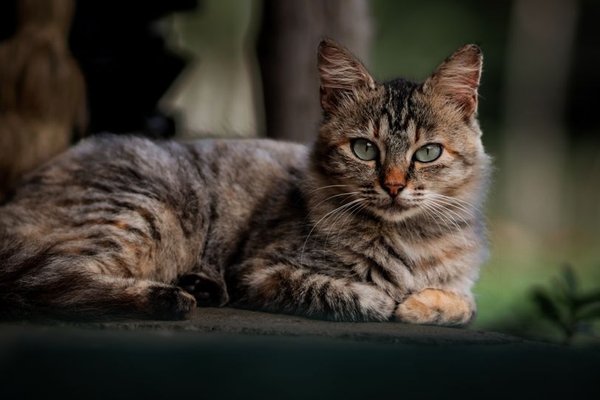
A cat pauses in the doorway, tail upright but ears tilted sideways. Is that a friendly greeting or a warning to keep your distance? The answer isn’t in the tail alone. Understanding cat body language meanings means noticing how ears, eyes, whiskers, posture, movement, and the surrounding situation fit together. A single signal can mean different things during play, rest, or a frightening encounter.
Start With the Whole Cat, Not One Body Part
Before interpreting a twitching tail or enlarged pupils, ask three questions: Is the cat’s body loose or stiff? Is the cat moving toward something or trying to leave? What happened immediately before the signal? Bright lights, sudden noises, unfamiliar visitors, and exciting toys can all change the picture.
Tail Positions and What They Suggest
Upright, Curved, or Gently Moving
An upright tail with a relaxed body commonly accompanies a social greeting. A slight curve at the tip can appear during a friendly approach. A loosely moving tail may reflect attention or interest, especially when a cat is watching something move. Tail posture needs context: a raised, puffed-up tail alongside an arched back is very different from a soft, upright greeting.
Thrashing, Tucked, or Puffed Up
Repeated hard tail swishes or thumps can signal mounting frustration or high arousal. If they happen while you’re stroking your cat, pause rather than continuing until a bite occurs. A tail tucked close to the body often accompanies fear or discomfort. Fur standing out along the tail makes the cat look larger and frequently appears during alarm or confrontation.
Ears, Eyes, and Whiskers: Read the Face Together
Ears pointing forward often show interest, while ears rotating sideways may indicate uncertainty or close attention to sounds. Ears pressed flat against the head can accompany fear, defensive behavior, or intense distress. Because ears also swivel independently to track noise, briefly turning one ear isn’t automatically a warning.
Soft eyes and unhurried blinking often appear when a cat feels at ease. Slow blinking toward a familiar person can be a friendly signal, although it is not a guaranteed request for touch. Wide pupils can occur in darkness, energetic play, fear, or excitement. Judge pupil size alongside lighting and the rest of the body, not by itself.
Whiskers resting naturally to the sides often accompany relaxation. Whiskers angled forward may indicate focused interest, such as investigating a toy. Drawn-back whiskers can appear when a cat feels threatened. Observe without touching or trimming them; whiskers are sensitive tools that help cats navigate their surroundings.
Posture Shows Confidence, Caution, and Defensiveness
Cat posture meaning becomes clearer when you watch how weight is carried. A cat standing with relaxed legs and an easy back is usually more comfortable than one compressed into a tense crouch. A frightened cat may keep its body low, tail close, and head directed toward a possible threat while preparing to retreat.
An arched back and raised fur can make a startled cat appear bigger. Rolling onto the back is more complicated: some cats do it when relaxed, but an exposed belly does not automatically invite rubbing. The cat may be stretching, playing, or preparing to defend itself with all four paws. For related behavior, exploring why cats show their bellies can help prevent misread invitations.
Three Everyday Scenes That Change the Meaning
At the Front Door
Your cat walks over with an upright tail, loose shoulders, and soft eyes. That combination suggests a comfortable greeting. Offer a hand at a respectful distance and let the cat choose whether to approach. If the cat stops short or turns away, accept that response rather than reaching after it.
During a Petting Session
Your cat begins by leaning into cheek scratches. Moments later, its skin ripples, tail flicks sharply, and ears rotate backward. Those changes can mean the interaction is becoming too much. Stop petting, allow an exit, and learn where your cat enjoys being touched. Recognizing this sequence is more useful than assuming a purr means unlimited consent.
When Visitors Arrive
A guest enters and the cat crouches behind a chair, eyes wide and ears sideways. Even without hissing, the combined cat communication signals suggest unease. Ask visitors not to pursue or corner the cat. Provide a quiet hiding place and let the animal reappear voluntarily. Gentle approaches to helping a shy cat feel safe work better than forced introductions.
Distance and Movement Are Part of the Message
Feline behavior includes decisions about proximity. A cat that rubs against your leg, approaches voluntarily, and returns after stepping away may be seeking social contact. A cat that retreats, freezes, or repeatedly turns its head away may want more space. Blocking the route to a doorway or hiding spot can turn mild uncertainty into fear.
Try a simple consent test: offer two or three gentle strokes around the cheeks, then stop. If the cat leans back in or nudges your hand, you may continue briefly. If it moves off, stiffens, or swishes its tail, end the interaction. Understanding cat slow blinking and other friendly signals is helpful, but choice matters more than any single cue.
Common Misreadings and When to Seek Help
Purring does not always mean happiness; some cats purr when stressed or in pain. Tail wagging is not reliably a sign of delight, as it often is in dogs. Hissing is usually a request for distance, not evidence that a cat is spiteful. Punishing warnings can increase fear and remove the signals that would otherwise help you respond safely.
Sudden changes deserve attention. A normally sociable cat that hides, sits hunched with narrowed eyes, resists handling, or stops jumping may be uncomfortable or ill. If unusual body language comes with appetite changes, litter-box problems, or reduced activity, arrange a veterinary assessment instead of treating it as a personality shift.
Frequently Asked Questions
What does it mean when a cat’s tail is straight up?
With relaxed muscles and a friendly approach, an upright tail commonly signals greeting or confidence. A rigid, puffed-up tail with flattened ears may instead indicate fear or alarm.
Why does my cat stare at me and blink slowly?
Slow blinking often occurs during calm social interaction. You can soften your gaze and blink back, but allow the cat to decide whether to approach.
Do flattened ears always mean aggression?
No. Flattened ears often appear when a cat is frightened, overwhelmed, or defensive. Check the tail, posture, surrounding noises, and available escape routes before interpreting the response.
How can I tell whether my cat wants to be petted?
Look for voluntary approach, relaxed posture, and leaning into brief touch. If the cat stiffens, turns away, or starts striking its tail, stop and give it space.
Learning Your Cat’s Individual Signals
The best way to understand cat body language meanings is to observe patterns across ordinary days. Notice how your cat looks during a relaxed greeting, focused play, and a stressful surprise. Compare those whole-body pictures rather than memorizing one-size-fits-all rules. When you respond to early signals and respect the cat’s choice to approach or withdraw, feline communication becomes clearer—and trust has room to grow.