
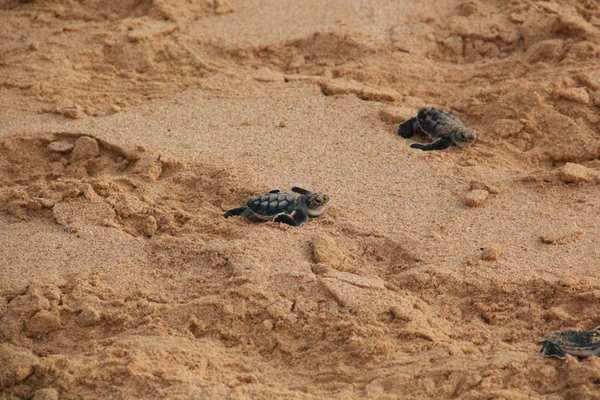
A sea turtle’s life begins beneath a sandy beach, but most of its story unfolds far from shore. A hatchling may cross an ocean before returning to coastal feeding grounds, and a female can spend decades growing before nesting for the first time. Understanding the sea turtle life cycle means following more than a series of sizes: habitat, diet, movement and survival all change as the animal develops.
The general pattern is eggs, hatchlings, ocean-going juveniles, larger juveniles and reproductive adults. Yet the timing and habitats differ among the seven living sea turtle species. A loggerhead’s journey, for example, is not identical to a leatherback’s.
Stage 1: Eggs Develop Beneath the Sand
The cycle begins when a mature female comes ashore, usually at night, and uses her rear flippers to excavate an egg chamber above the usual reach of waves. She deposits a clutch of soft-shelled eggs, covers it carefully and returns to the water. She does not guard the nest.
Many nests contain around 100 eggs, although clutch sizes differ by species and population. Incubation commonly lasts about two months, with temperature influencing the timing. Unlike mammals, sea turtles have temperature-dependent sex determination: warmer incubation conditions generally produce more females, while cooler conditions favor males. Excessive heat can harm developing embryos.
Beach conditions therefore shape the next generation before any turtle sees the ocean. The location, shading and stability of sea turtle nesting beaches all matter.
Stage 2: Hatchlings Emerge and Reach the Water
Sea turtle hatchlings break their shells using a temporary egg tooth, then work upward through the sand. They often emerge together, frequently after dark, and head toward the brighter, open horizon over the sea. Natural beach slope and light cues help guide them.
This short crawl is dangerous. Crabs, birds and other predators may take hatchlings before they reach the surf. Artificial beachfront lighting can pull them in the wrong direction, away from the water. Once offshore, young turtles must avoid marine predators.
Seeing hatchlings on a beach is memorable, but helping means keeping your distance. Never pick them up for a photograph or shine a phone flashlight toward them. Follow local conservation guidance and leave their route to the sea clear.
Stage 3: The Open-Ocean Years
For several species, the next chapter takes place in ocean currents, sometimes among floating seaweed such as Sargassum. These drifting patches offer shelter and small animals to eat. The tiny turtles swim, feed and grow while currents carry them across vast distances.
Scientists once called this period the “lost years” because juvenile sea turtles were difficult to observe. Tracking studies have revealed more about their movements, but details remain poorly understood. Young loggerheads, for instance, can spend roughly 7 to 15 years in oceanic habitats before shifting toward nearshore waters.
Not every species follows the same route. Leatherbacks remain strongly associated with offshore waters, while other turtles make more pronounced transitions to coastal habitats. Studying sea turtle migration routes helps explain why protecting a nesting beach alone cannot safeguard an entire population.
Stage 4: Juveniles Grow and Change Their Diets
As many young turtles become larger, they move into productive coastal areas such as seagrass meadows, reefs and continental shelves. These places provide food and shelter. Turtle development is gradual; a juvenile does not become an adult simply because it reaches a particular beach.
Diet often changes alongside habitat. Young green turtles may eat animal and plant material, while many older greens feed heavily on seagrasses and algae. Hawksbills are closely associated with reef habitats and feed extensively on sponges. Loggerheads use powerful jaws to crush crabs, mollusks and other hard-shelled prey.
These differences matter ecologically. Sea turtles are not interchangeable ocean grazers: each species connects habitats and food webs in its own way. Learning what sea turtles eat also clarifies their changing roles as they grow.
Stage 5: Adults Travel Between Feeding and Breeding Areas
Reaching sexual maturity can take decades. Female loggerheads, for example, may mature at around 35 years, while estimates differ for other species. Size, growth rate and food availability all influence the journey from juvenile to adult.
Once mature, sea turtles continue to feed and migrate. They are air-breathing reptiles, surfacing throughout their lives, even when traveling far offshore. Some populations move hundreds or thousands of miles between feeding areas and breeding grounds. Adult males generally remain at sea, while females return to land to lay eggs.
Stage 6: Mating and the Return to Nesting Beaches
Sea turtle reproduction closes the circle without ending the adult’s life. Mating generally occurs in the water. Mature females then migrate toward nesting regions, often near the areas where they hatched many years earlier. Researchers believe navigational cues, including Earth’s magnetic field, help explain these returns.
A female may deposit several clutches during one nesting season, commonly separated by roughly two weeks. She may then spend years feeding before another breeding season. Exact intervals depend on the species and individual.
Picture a loggerhead born on a Florida beach: it may pass years in the open Atlantic, later forage in coastal waters, and eventually return to the wider natal nesting region as a mature female. That journey links one stretch of sand to a much larger ocean ecosystem.
Why Survival Is Difficult at Every Stage
Natural losses are high among eggs and hatchlings, but human pressures can affect every sea turtle stage. Coastal development, artificial lights, beach disturbance, entanglement in fishing gear, vessel strikes and swallowed plastic all create risks. Rising sand temperatures and changing coastlines add further concerns.
Practical beach habits make a difference: remove chairs and litter, fill deep sand holes, use approved turtle-friendly lighting and respect marked nesting zones. At sea, reducing lost fishing gear and marine debris can help juveniles and adults. Conservation works best when it connects beaches, migration corridors and feeding habitats.
Frequently Asked Questions
How many stages are in the sea turtle life cycle?
A useful overview has five broad sea turtle stages: egg, hatchling, oceanic juvenile, larger juvenile and adult. Descriptions sometimes divide the juvenile years differently, because habitats and growth patterns vary among species.
How long does a sea turtle take to become an adult?
Often decades rather than a few years. Female loggerheads reach maturity at about 35 years, but other species and populations mature at different ages. Nutrition and environmental conditions affect growth.
Do baby sea turtles return to their mothers?
No. Females leave after covering their nests, and hatchlings begin life independently. There is no parental care after the eggs are laid.
Do sea turtles always return to the exact beach where they hatched?
Females commonly return to their natal region, sometimes very near their original beach, but not necessarily to the precise spot. Nesting fidelity differs among individuals and species.
From One Nest to an Ocean-Spanning Life
The sea turtle life cycle connects weeks beneath sand with years of ocean travel, changing diets and eventual reproduction. Its most striking feature is continuity across distant habitats: the health of a nesting beach can matter decades before its hatchlings become breeding adults. Protecting each part of that journey gives future generations a better chance to complete it.